
Circuit Clerk Criminal Case Search
The Clerk of the 18th Judicial Circuit Court runs the official search for DuPage criminal cases. The Public Information Application at the Circuit Clerk supports a name search or a case-number search after the user clears the Cloudflare check. The portal returns case caption, charges, next court date, courtroom, judge, docket entries, and balance due. Sealed and expunged cases are removed from the index under 20 ILCS 2630/5.2 and do not appear in public results. The Clerk's Criminal/Traffic department answers questions at (630) 407-8600.
The Sheriff's records division handles arrest reports and incident reports rather than court files. People who want the booking sheet or a copy of the police report ask the Sheriff or the arresting municipal department. The court file at the Circuit Clerk is the right source for the case status, the disposition, and the sentence.
Arrest Record vs. Court Record
Illinois treats an arrest and a court case as two different records. The arrest record is what the arresting agency creates at the moment of arrest or charging. It usually shows name, date of birth, charges, arresting officer, agency, location, and booking number. The court record is what the Circuit Clerk creates when a case is filed. It shows case number, parties, judge, courtroom, dockets, dispositions, and sentence.
| Arrest Record | Criminal Court Record | |
|---|---|---|
| Created by | Sheriff or arresting municipal agency | Clerk of the 18th Judicial Circuit Court |
| Lifecycle | Starts at booking, ends at release | Starts at filing, ends at final disposition |
| Shows | Charges at arrest, booking number, photo | Counts charged, plea, disposition, sentence |
| Access | Police records division or FOIA | Circuit Clerk portal or public terminals |
| Effect of expungement | Erased under 20 ILCS 2630/5.2 | Removed from public index under 20 ILCS 2630/5.2 |
An arrest that does not lead to a charge will not generate a court file. The Sheriff's records division can confirm whether an arrest report exists when no DuPage case turns up in the Clerk's portal.
Charges vs. Convictions
A criminal record can show an arrest, a charge, a conviction, or a non-conviction outcome. A charge is what the State's Attorney files, and it is not a finding of guilt. A conviction is a finding of guilt after a plea or a verdict. Court supervision in Illinois is a third path that lets a defendant complete conditions and avoid a conviction record under specific statutes. A dismissal or a not-guilty verdict leaves the case in the record as a non-conviction.
Note: A pending DuPage charge that ends in supervision still appears in the court file even though it is not a conviction; check the disposition line before assuming a record is clean.
Some DuPage docket lines also show the bond status, the pretrial release condition, or any agreed continuance under the Pretrial Fairness Act. A close read of the disposition, the sentence, and the bond block usually resolves whether a person was convicted, supervised, or released without a finding of guilt.
Expungement and Sealing Under Illinois Law
Illinois lets people clear or hide qualifying arrest and court records under the Criminal Identification Act. Expungement erases the record from public indexes. Sealing keeps the record but hides it from most public access. The eligibility tests turn on the offense type, the disposition, the waiting period, and any later arrests.
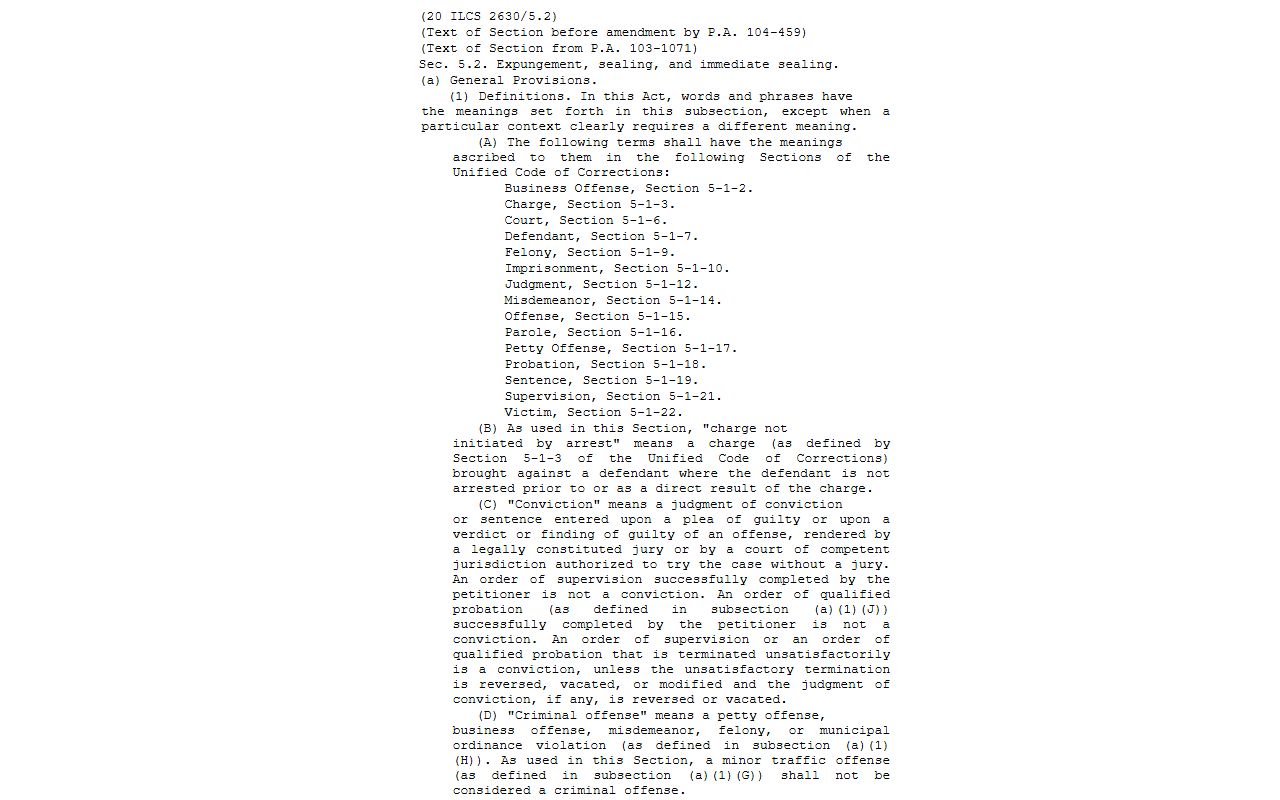
The governing statute is published online. The Illinois General Assembly hosts 20 ILCS 2630/5.2, which sets eligibility, the process, and the legal effect of an expungement or sealing order.
The Circuit Clerk has hosted free DuPage County Expungement Clinics that pair volunteer attorneys with eligible residents to prepare petitions and file them with the court at no cost.
Common denial reasons include ineligible offense type, an unpaid balance or unfinished sentence on a qualifying case, a missed waiting period, a pending charge, or an objection from the State's Attorney.
Juvenile Records
The Juvenile Court Act of 1987 governs juvenile delinquency, abuse, neglect, and dependency cases in Illinois. The Act restricts public access to juvenile records and limits who can request a copy. The Circuit Clerk's eAccess system excludes cases where a juvenile is the first named defendant. Juvenile expungement is governed by 705 ILCS 405/5-915 and uses a separate petition path from adult expungement.
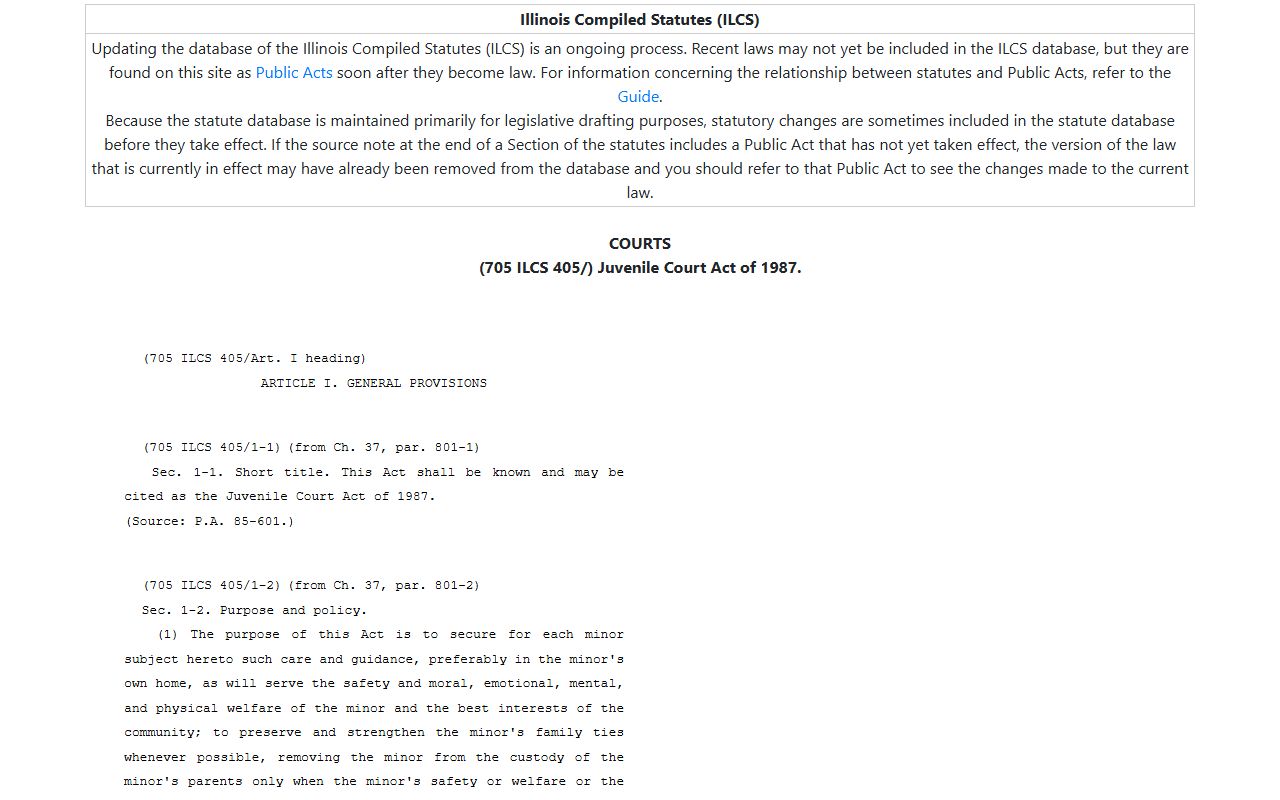
The full statute is published online. The Illinois General Assembly hosts the Juvenile Court Act of 1987 as a printable reference.
A parent, guardian, or attorney for a DuPage minor should rely on the statute plus a local attorney's guidance before relying on any third-party search engine for juvenile information.
Illinois Sex Offender Registry
The Illinois State Police runs the public sex offender registry. The registry is updated daily and pulls from registrations made under 730 ILCS 150. Users can search by name, by city, by ZIP code, by county, or by status. The state warns that the registry is the official source and that third-party copies may be out of date.
The official search lives on the ISP site. Open the Illinois State Police sex offender search to query the registry.
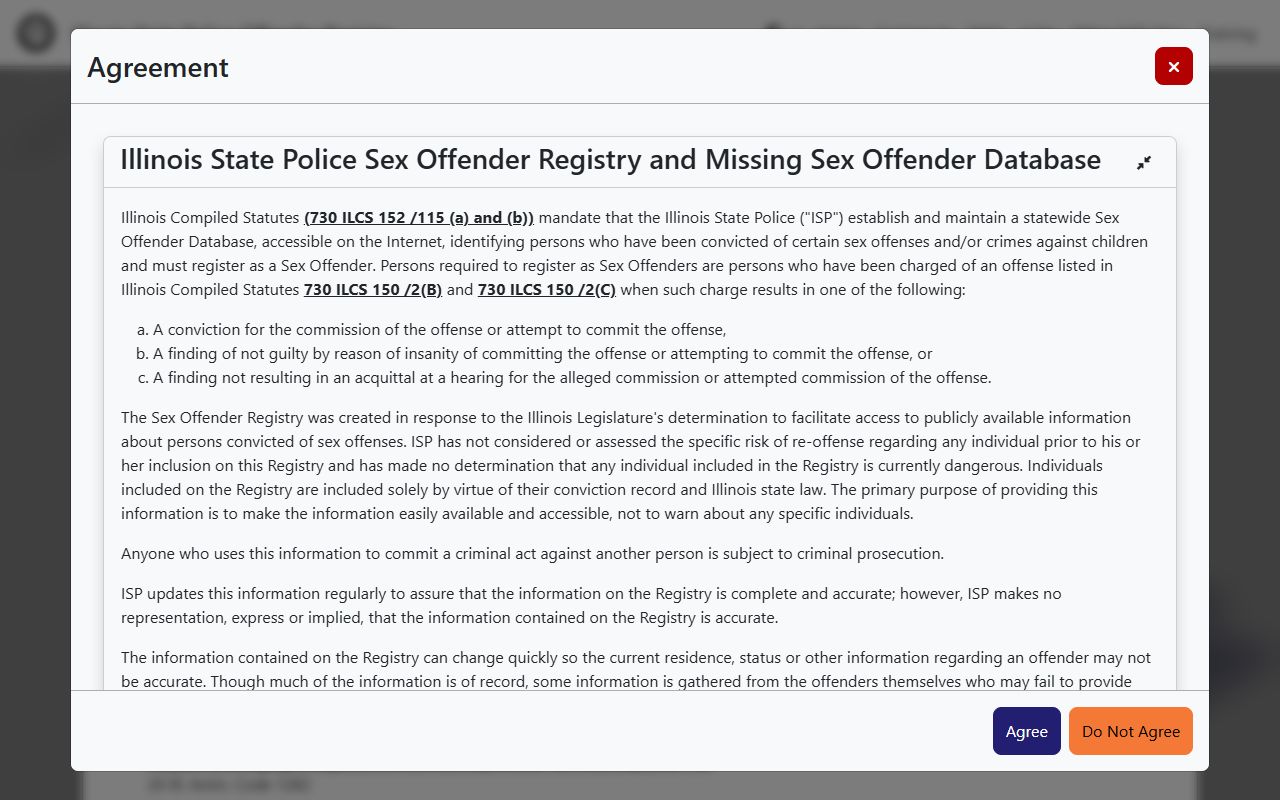
The disclaimer page that fronts the registry sets expectations on accuracy and on the user's responsibility when relying on the data.
The disclaimer page is a useful read for anyone planning to use registry data for housing, employment, or community-watch purposes.
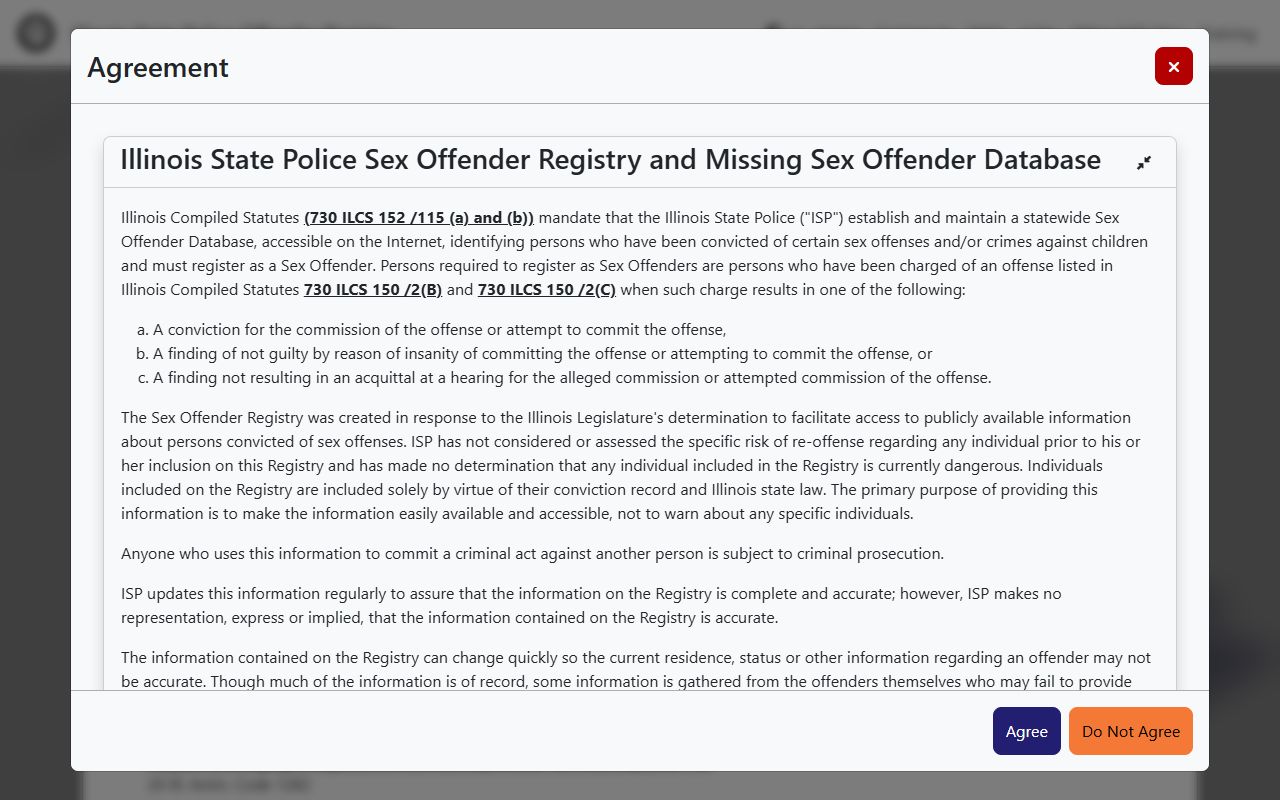
Note: The registry is daily-updated state data; verify with ISP if a result must hold up in a tenant screening or a court filing.
State's Attorney and Public Defender
The DuPage County State's Attorney prosecutes felony, misdemeanor, juvenile delinquency, traffic, and county civil cases under Illinois law. Robert Berlin is listed as the elected State's Attorney in DuPage public materials. The State's Attorney's office issues victim and witness services and works with the courts on charging, plea, sentencing, and post-conviction matters.
The DuPage County Public Defender represents eligible defendants in criminal and juvenile cases. The court determines eligibility through a financial affidavit. A defendant who qualifies is appointed the Public Defender or, when there is a conflict, conflict counsel. The right to appointed counsel applies to qualifying criminal and juvenile matters under federal and Illinois law.
Background Checks Using DuPage Criminal Records
Background checks for employment, tenant screening, or volunteer screening must be run under the Fair Credit Reporting Act when a third-party agency prepares the report. DuPage County criminal records that show up in a public search are not authorized for FCRA-regulated decisions unless the user works through a properly licensed consumer reporting agency. The Illinois State Police runs the state's official criminal history check through the BCI Bureau of Identification, and that result is the one most courts and employers in Illinois trust.
People who want to challenge a result in a DuPage court record should start with the Circuit Clerk. The Clerk can correct a clerical error and can route an Illinois State Police rap sheet challenge to the right state office. For arrest information that lives in the local police file rather than the court file, FOIA the arresting agency directly.
Note: A background check should always include the official source for the records that matter. Do not rely on a third-party data broker as the final word.